Ready to play
In curriculum order. Tick a lesson once your child has done it; ticks stay in this browser only.
-
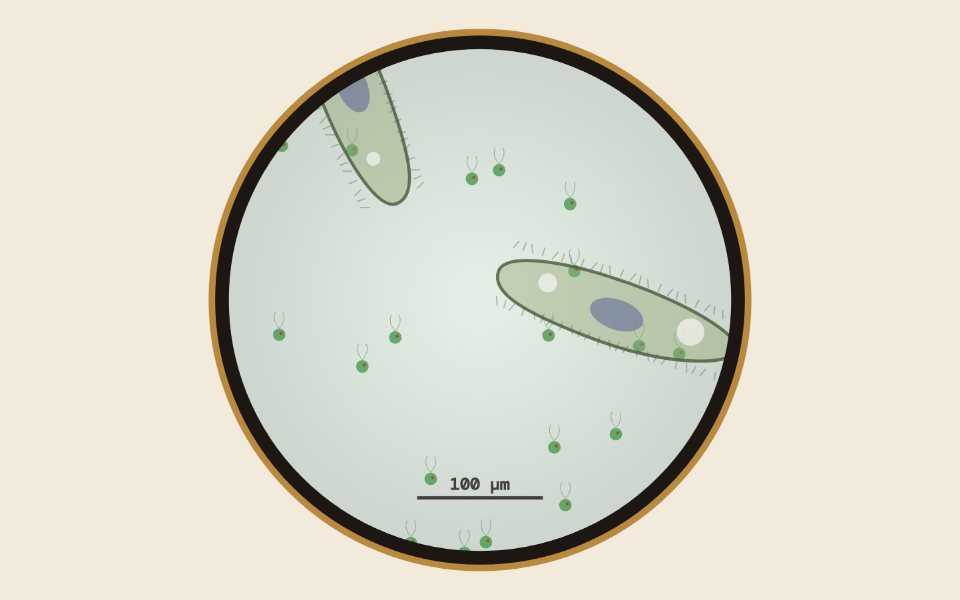
B2.1 · Cell theory
 Up next
Where do cells come from?
12 min -
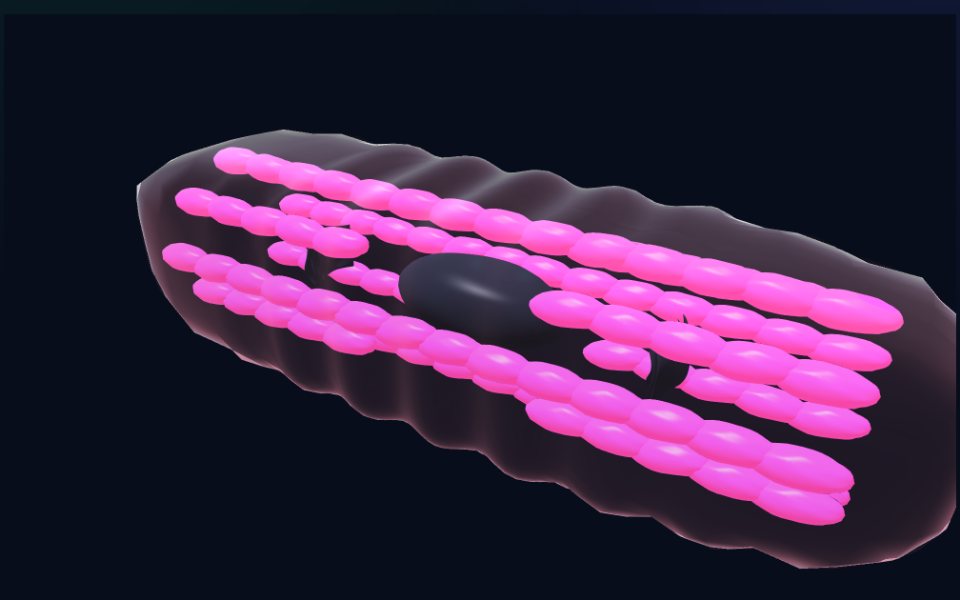
B2.2 · Parts of a cell and their jobs
 Up next
Whose cell is this? A 3D cell mystery
15 min -
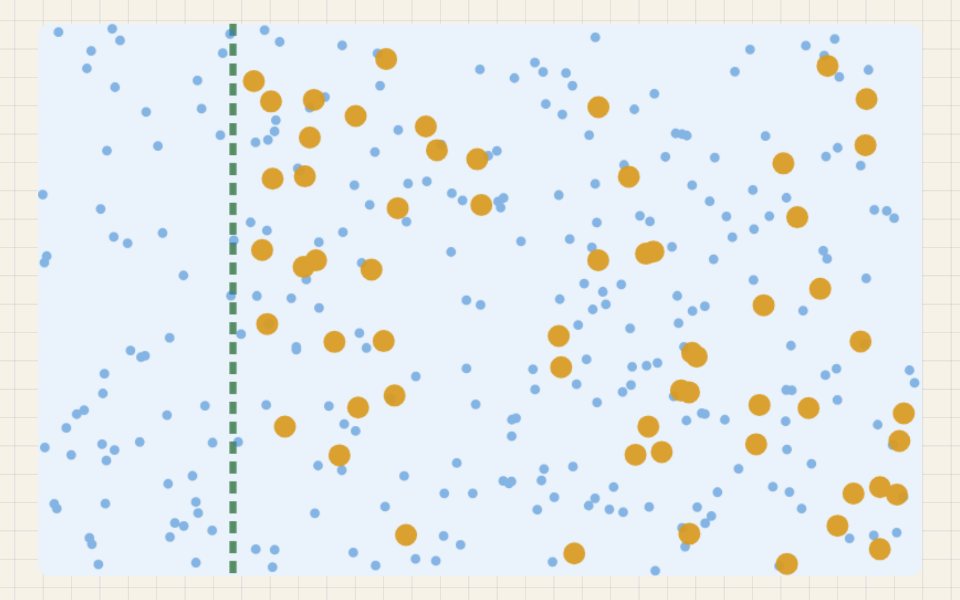
B2.4 · Diffusion and osmosis
 Up next
Why does a raisin swell in water?
12 min -
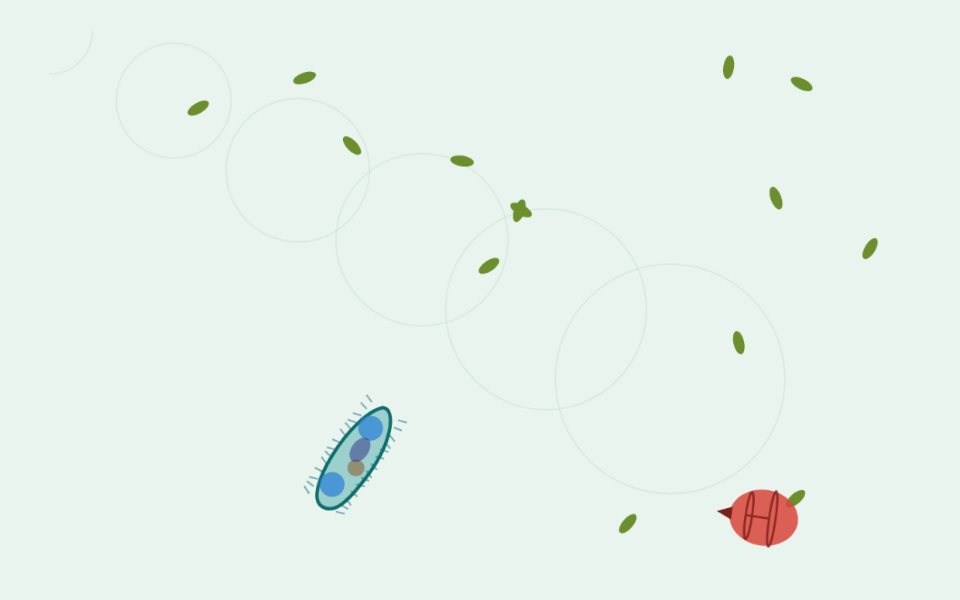
B2.5 · Single-celled and many-celled organisms
 Up next
Could you survive as one cell?
12 min -
B2.6 · Cells, tissues, organs, systems
 Up next
From one cell to you
10 min
Every idea
Grouped by curriculum strand. A filled dot means there is a lesson.
B Life Systems6 / 6 with a lesson
- Cell theoryWhere do cells come from?B2.1All living things are made of cells, a cell is the smallest thing that is alive, and every cell comes from another cell.
- Parts of a cell and their jobsWhose cell is this? A 3D cell mysteryB2.2Every part of a cell has a job, and its shape gives the job away: folds for more surface, a pored wrapper for the instructions, a gate that chooses what comes in.
- Plant and animal cellsWhose cell is this? A 3D cell mysteryB2.3A plant cell is an animal-style cell with three upgrades for a life standing still in the sun: a stiff wall, chloroplasts to make its own food, and one big water-filled vacuole that keeps it firm.
- Diffusion and osmosisWhy does a raisin swell in water?B2.4Particles spread from where they are crowded to where they are not; when only water can cross a membrane, water moves toward the side with less water, so a plant cell in salty water loses water and goes limp.
- Single-celled and many-celled organismsCould you survive as one cell?B2.5A single-celled organism has to do every job of life in one cell; many-celled organisms split the jobs among specialized cells.
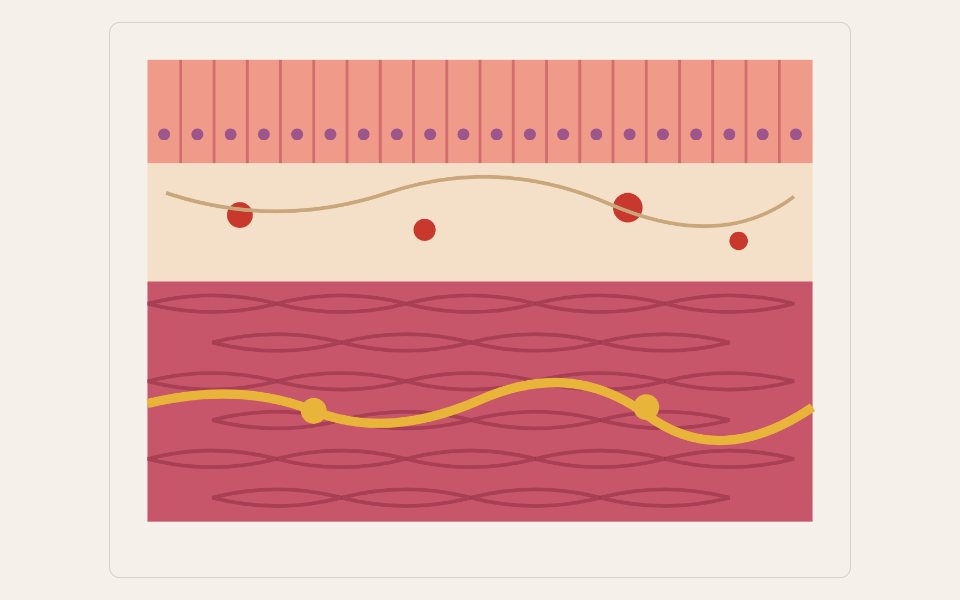
- Cells, tissues, organs, systemsFrom one cell to youB2.6Similar cells work together as a tissue, tissues build an organ, and organs team up as an organ system.
C Matter and Energy0 / 10 with a lesson
- Density: how much stuff in how much spaceComing soonC2.2Density is mass divided by volume, so a big light thing and a small heavy thing can have the same mass but very different densities.
- Why solids, liquids and gases differ in densityComing soonC2.3Particles packed tight make a dense solid, particles that slide past each other make a liquid, and particles far apart make a gas many times less dense; water is the odd one, as its solid floats.
- Floating, sinking and densityComing soonC2.5An object floats if it is less dense than the fluid around it, so the same egg sinks in fresh water and floats in salty water.
- Viscosity: thick and runny fluidsComing soonC2.1Viscosity is a fluid's resistance to flowing; warming most liquids makes them runnier, so the same jar pours more litres per second when hot.
- What makes a fluid flow fasterComing soonC2.1 · C2.8How fast a fluid flows depends on the push behind it, the width and length of the pipe, and the fluid's viscosity; a pipe twice as wide carries far more than twice the flow.
- Squeezing gases and liquidsComing soonC2.4Gas particles have empty space between them so a gas squeezes easily, while liquid particles already touch so a liquid barely squeezes at all.
- Hydraulic and pneumatic systemsComing soonC2.4 · C2.9Hydraulic systems push with liquid, which barely squeezes, so they are strong and precise; pneumatic systems push with air, which squeezes, so they are springy, light and fast.
- Pascal's law and hydraulic liftsComing soonC2.7Push on a trapped liquid and the pressure spreads equally everywhere, so a small force on a small piston becomes a big force on a big piston.
- Pressure, volume and temperature of gasesComing soonC2.6Squeeze a gas and its pressure goes up; heat it and its particles hit harder, so it pushes out or its pressure rises; take away the outside pressure and it swells.
- Moving fluids in bodies and machinesComing soonC2.10Your heart is a pump, your valves are one-way gates and your blood vessels are pipes that can squeeze; machines copy the same ideas with pumps, check valves and hoses.
D Structures and Mechanisms0 / 4 with a lesson
- Systems: input, process, outputComing soonD2.1 · D2.2 · D2.3A system is parts working together for a purpose: inputs go in, processes change them, outputs come out, and some parts are there only to keep it safe and running smoothly.
- Work: force times distanceComing soonD2.4 · D2.5In science, work means a force moving something along the direction of the push: work equals force times displacement, so pushing a wall all day does no work on the wall.
- Mechanical advantageComing soonD2.6A simple machine lets a small input force move a big load by spreading the work over a longer distance; mechanical advantage is the output force divided by the input force.
- Efficiency and lost energyComing soonD2.4 · D2.7No machine gives back all the energy put in; some always escapes as heat and sound through friction, and efficiency is the useful output divided by the input.
E Earth and Space Systems0 / 7 with a lesson
- Where Earth's water isComing soonE2.1Almost all of Earth's water is salty ocean; of the small fresh share, most is locked in ice and underground, so the lakes and rivers we drink from are a tiny sliver.
- WatershedsComing soonE2.2A watershed is all the land that drains into the same river or lake, so whatever happens upstream, a spill or a new parking lot, shows up downstream.
- The water tableComing soonE2.3Underground, the soil and rock below a certain level are soaked; that top level is the water table, and it drops when we pump or pave faster than rain can refill it.
- Melting ice and sea levelComing soonE2.4Melting land ice like glaciers adds water to the oceans and raises the sea, but melting floating sea ice barely does; less white ice also means Earth soaks up more sunlight and warms faster.
- How big water bodies shape climateComing soonE2.5Water warms up and cools down much more slowly than land, so places beside big lakes or oceans have milder winters and cooler summers, and get lake-effect snow.
- Measuring water qualityComing soonE2.6Clear water isn't always safe water; scientists check indicators like cloudiness, acidity, dissolved oxygen and bacteria, and runoff, sewage and farming can push each one the wrong way.
- How a city cleans its waterComing soonE2.7A treatment plant cleans water in steps, clumping dirt, letting it settle, filtering, then disinfecting, and a city also manages how much water people use.
Practised inside lessons, not separate pages
These expectations are about speed and fluency with an idea above. They show up as practice in that idea's lesson.
Not covered here
These are projects, process skills or everyday money knowledge. They don't have a single "why" to take apart, so we leave them to the classroom.
- B1.1 Assess how technologies such as microscopes have improved our understanding of cells and what they do.
- B1.2 Weigh the benefits and harms of new cell-biology technologies for human health and the environment, from different points of view.
- C1.1 Assess the environmental, social and economic impacts of inventions that rely on how fluids behave.
- C1.2 Assess the impacts of fluid spills on the environment and on communities, including First Nations, Métis and Inuit communities, and the cost and difficulty of cleaning them up.
- D1.1 Assess the social, economic and environmental impacts of automating systems.
- D1.2 Weigh other ways of meeting the needs that existing systems meet, from different points of view.
- D2.8 Explain how giving users information and support helps systems run safely and efficiently.
- D2.9 Describe inventions in mechanical systems that made industries more productive.
- D2.10 Identify social factors that shape how a system changes over time.
- E1.1 Assess the impacts of fresh water scarcity and propose a plan for using fresh water sustainably.
- E1.2 Understand First Nations, Métis and Inuit knowledges and values about water and their ways of caring for it.
- E1.3 Assess how discoveries and technologies have affected local and global water systems.