Ready to play
In curriculum order. Tick a lesson once your child has done it; ticks stay in this browser only.
-
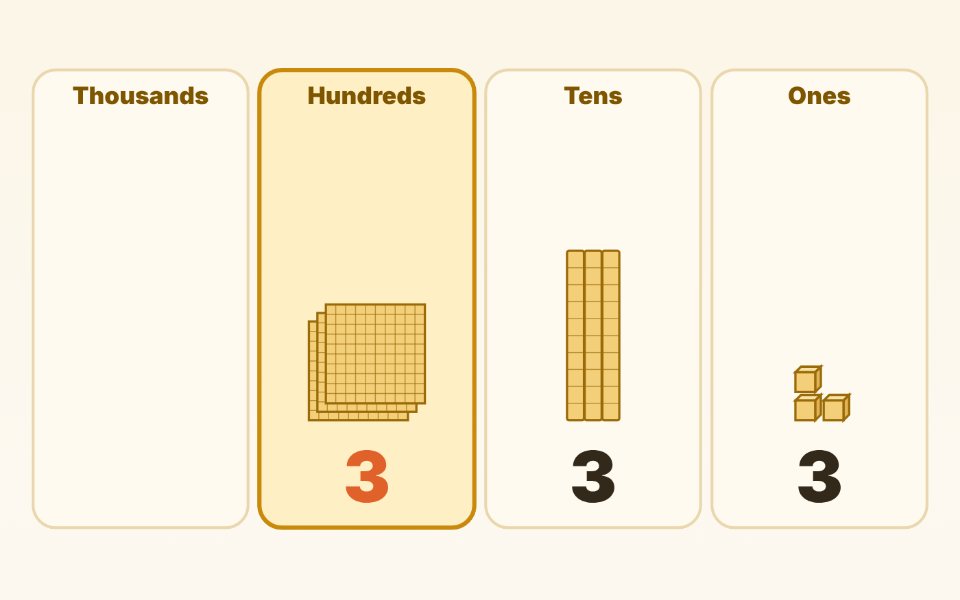
B1.1 · B1.2 · Place value
 Up next
Is a 3 always worth three?
6 min -
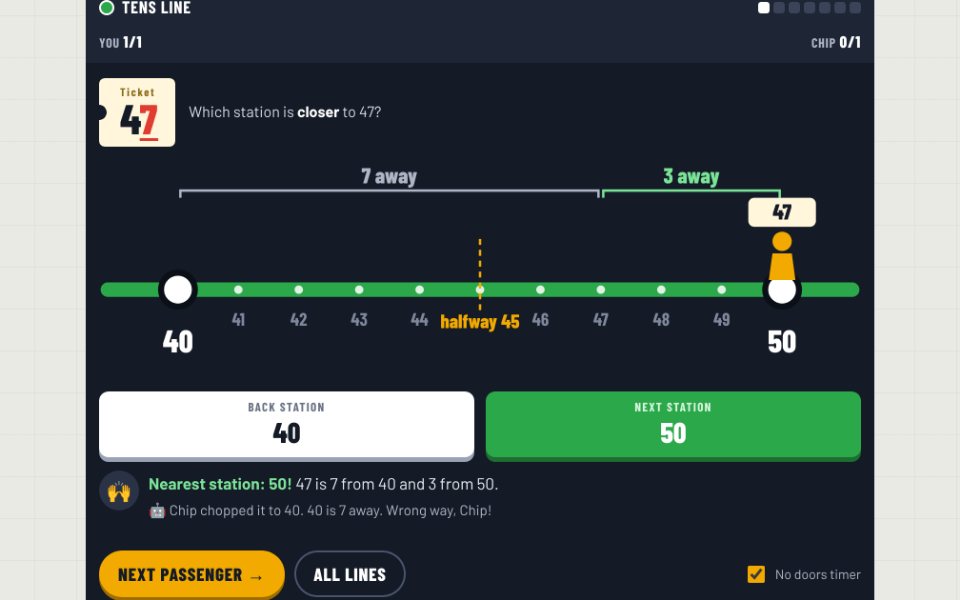
B1.3 · B1.8 · Rounding
 Up next
Is 47 closer to 40 or 50?
8 min -
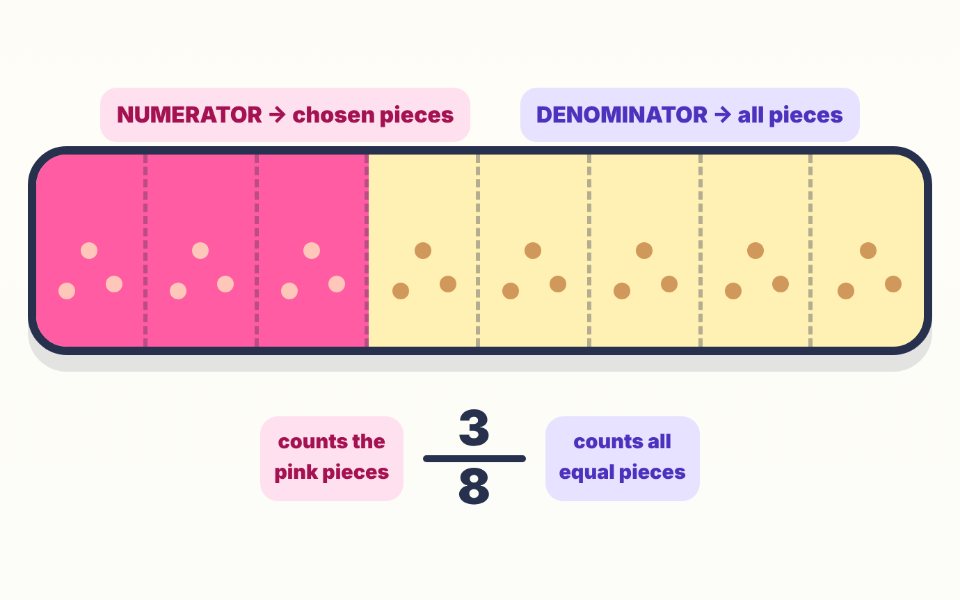
B1.4 · What a fraction means
 Up next
Fraction Snack Lab: Meet the Two Numbers
-
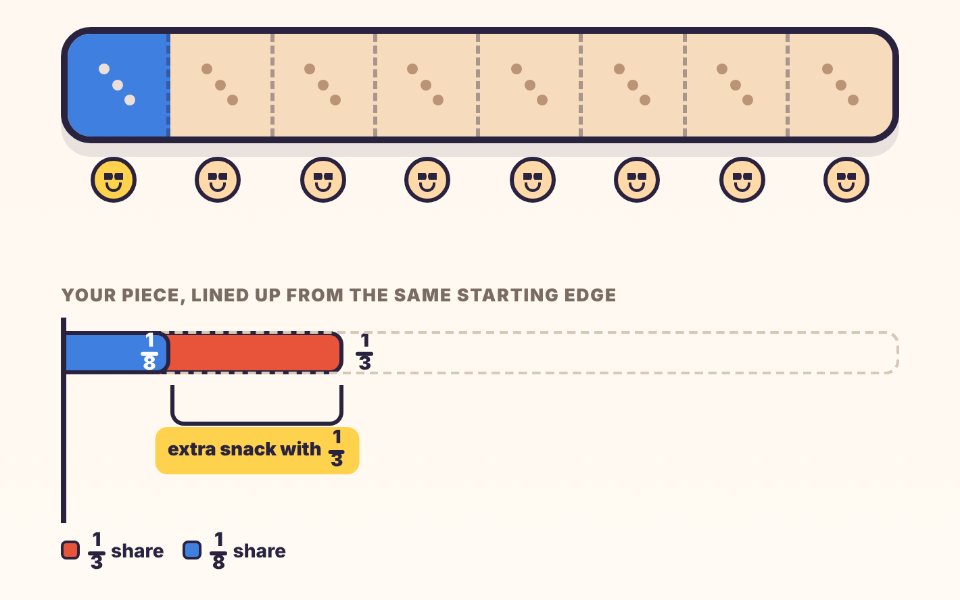
B1.5 · Comparing unit fractions
 Up next
Why is 1/8 smaller than 1/3?
6 min -
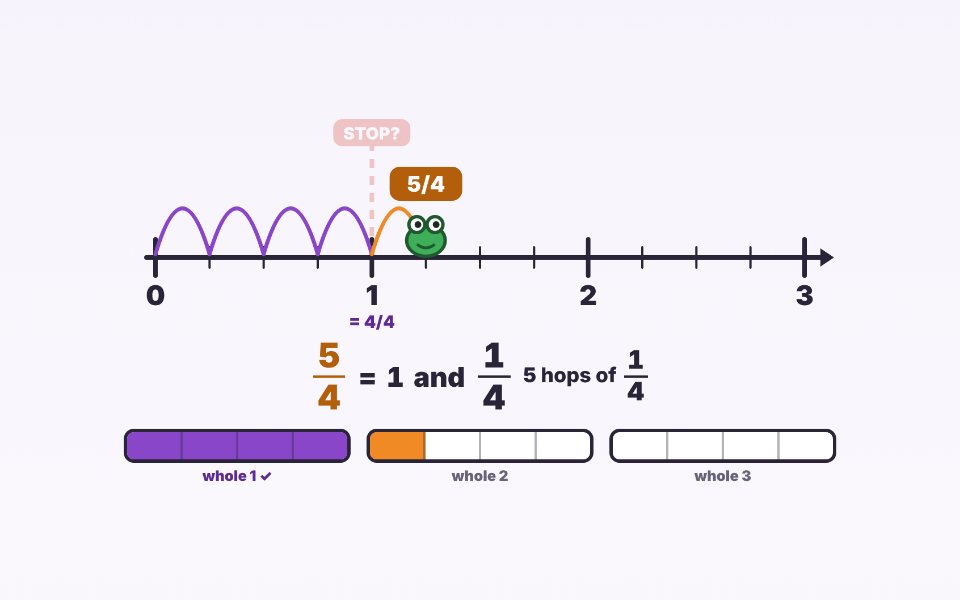
B1.6 · Fractions on the number line
 Up next
Can a fraction be bigger than 1?
6 min -
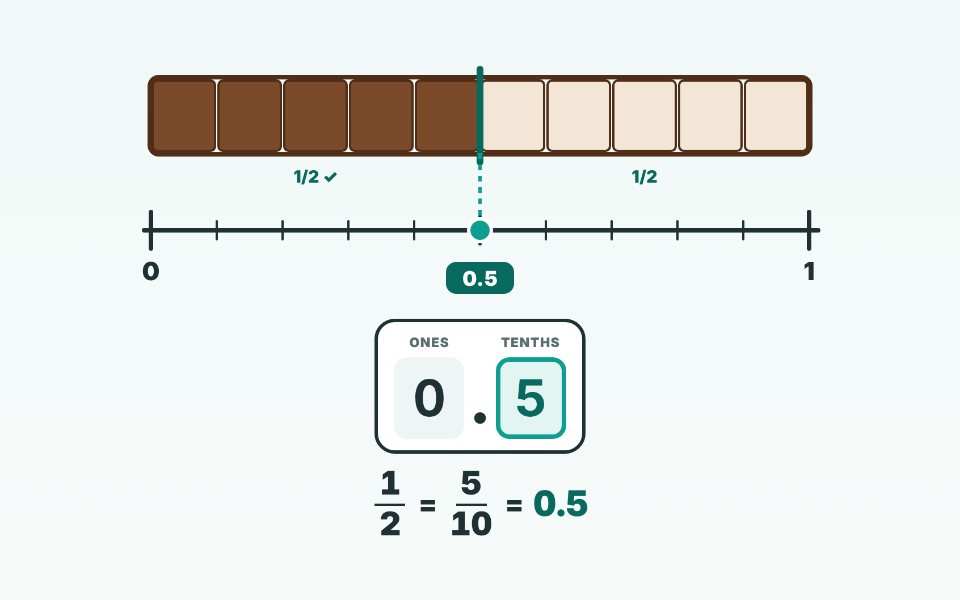
B1.7 · B2.3 · Decimal tenths
 Up next
Why is 1/2 the same as 0.5?
6 min -
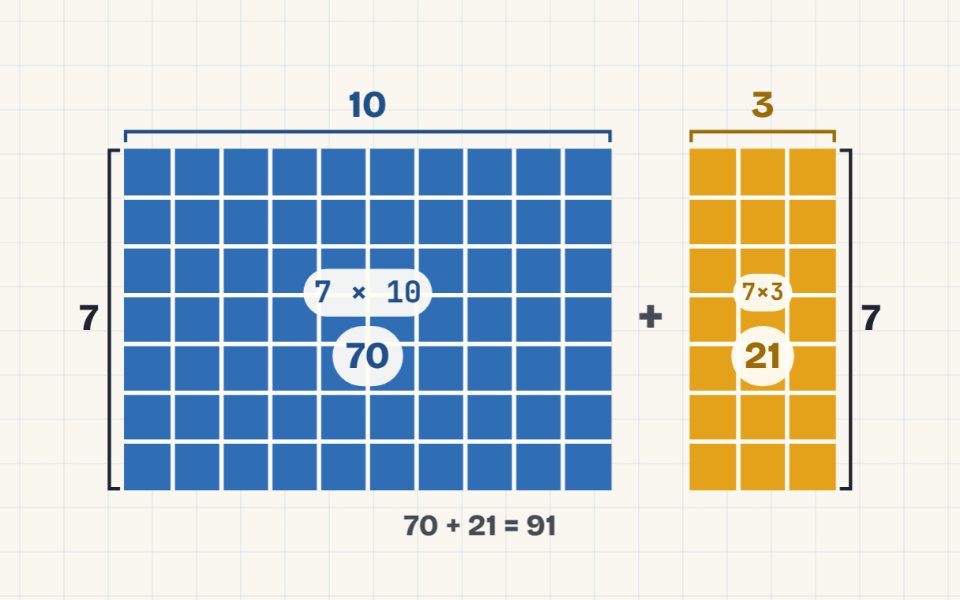
B2.1 · Properties of multiplication
 Up next
Why does 7 × 13 equal 70 + 21?
8 min -
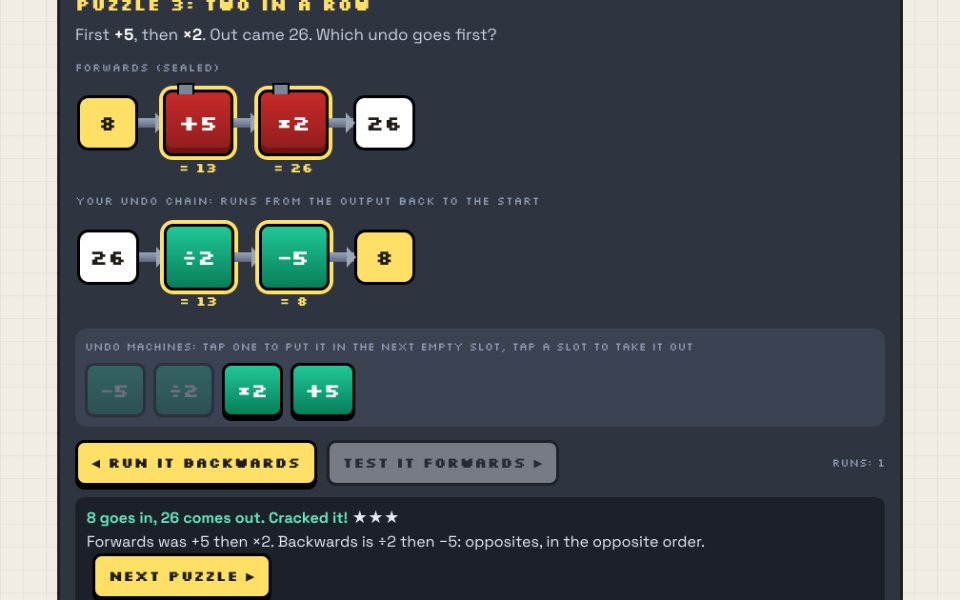
B2.1 · E2.6 · Inverse operations
 Up next
How do you find the number that went in?
10 min -
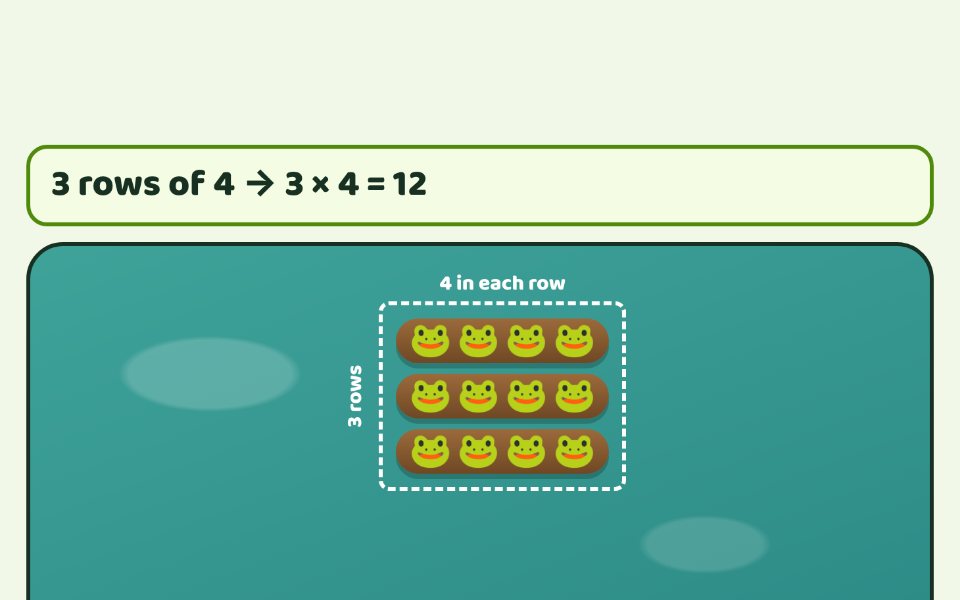
B2.2 · B2.5 · What multiplication means
 Up next
What makes something a times question?
10 min -
B2.3 · C1.4 · Multiplying by 10, 100 and 1000
 Up next
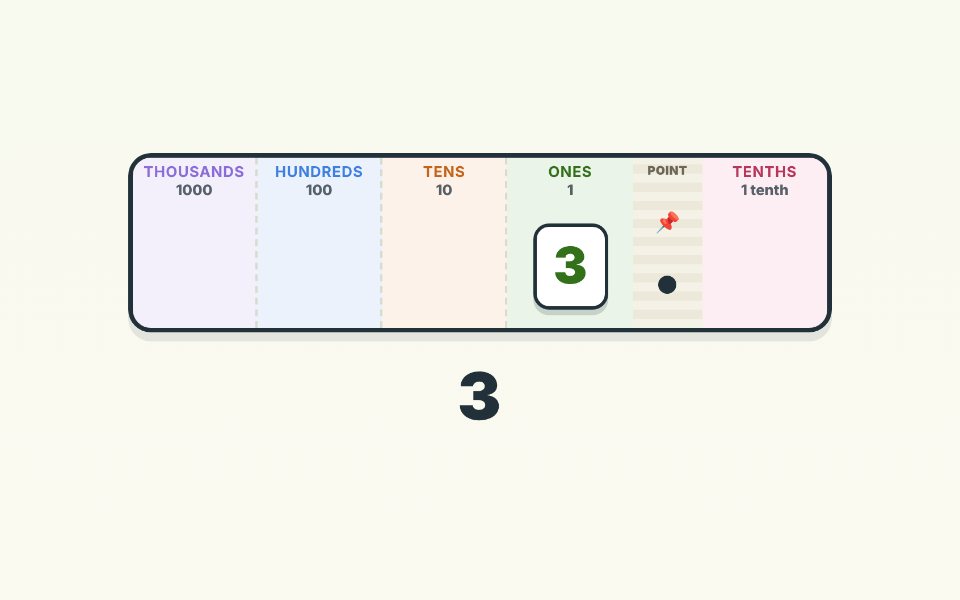
Why isn't ×10 just "add a 0"?
6 min -
B2.4 · F1.2 · Regrouping in addition and subtraction
 Up next
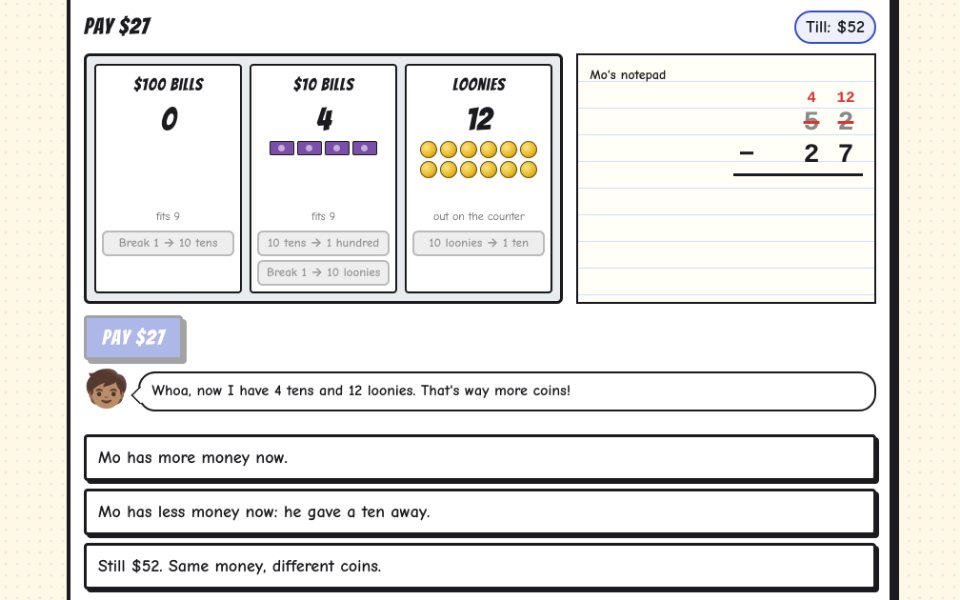
What does borrowing really do in 52 − 27?
12 min -
B2.6 · Division and remainders
 Up next
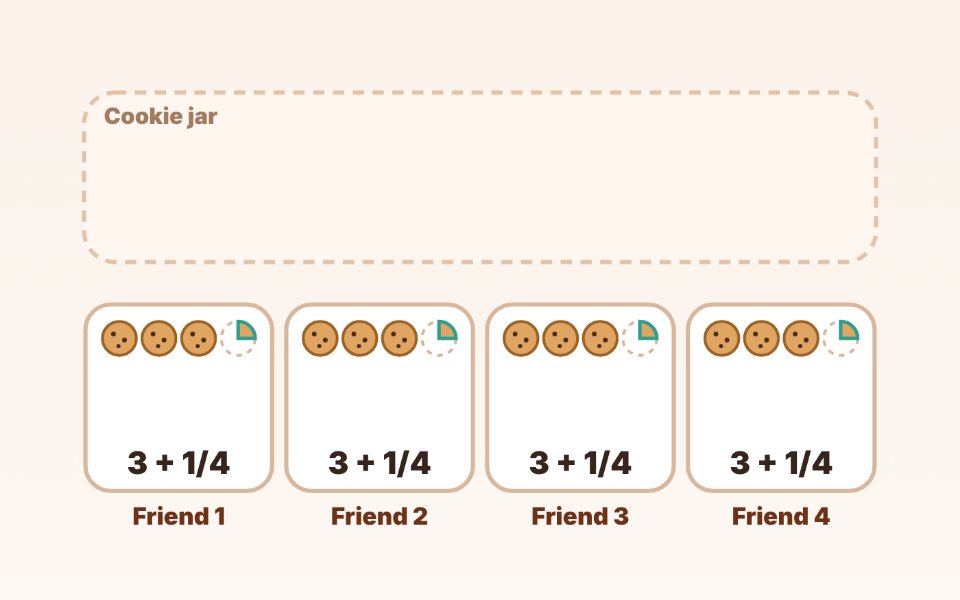
What happens to the leftovers?
6 min -
B2.7 · Multiplying a fraction by a whole number
 Up next
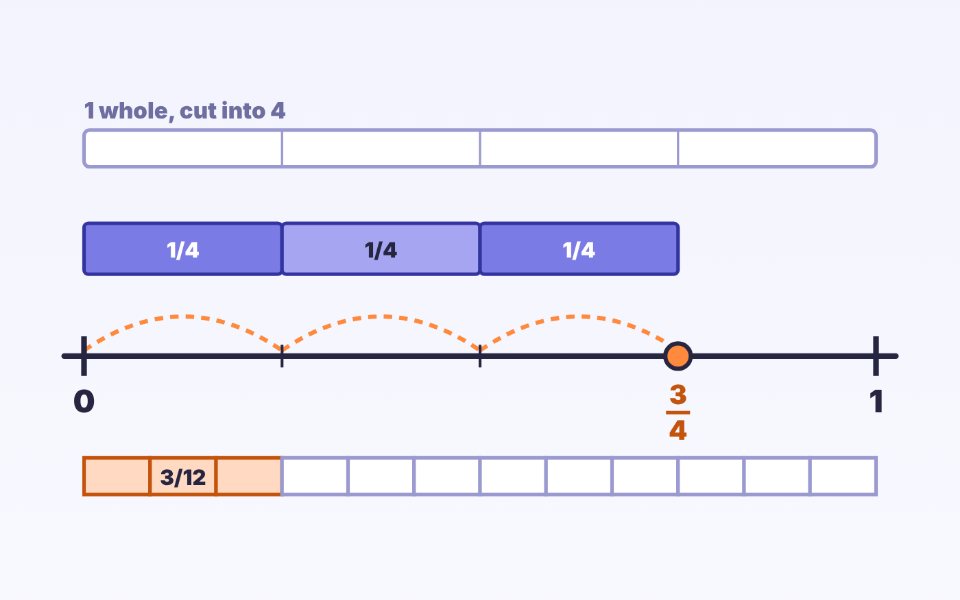
What is 3 × 1/4?
5 min -
B2.8 · Rates
 Up next
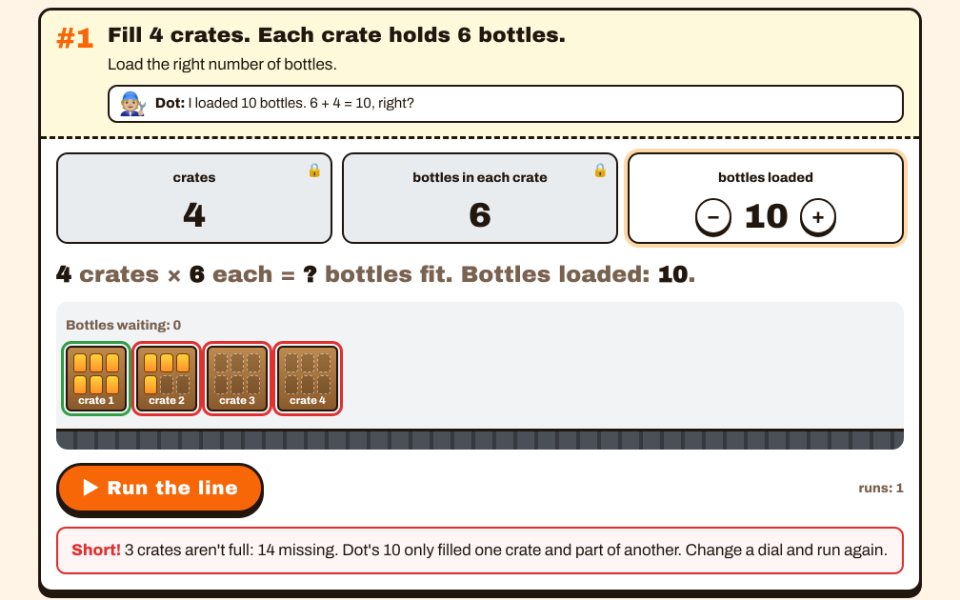
Each crate holds 6. How many in 4 crates?
8 min -
C1.1 · C1.3 · C1.4 · Repeating and growing patterns
 Up next
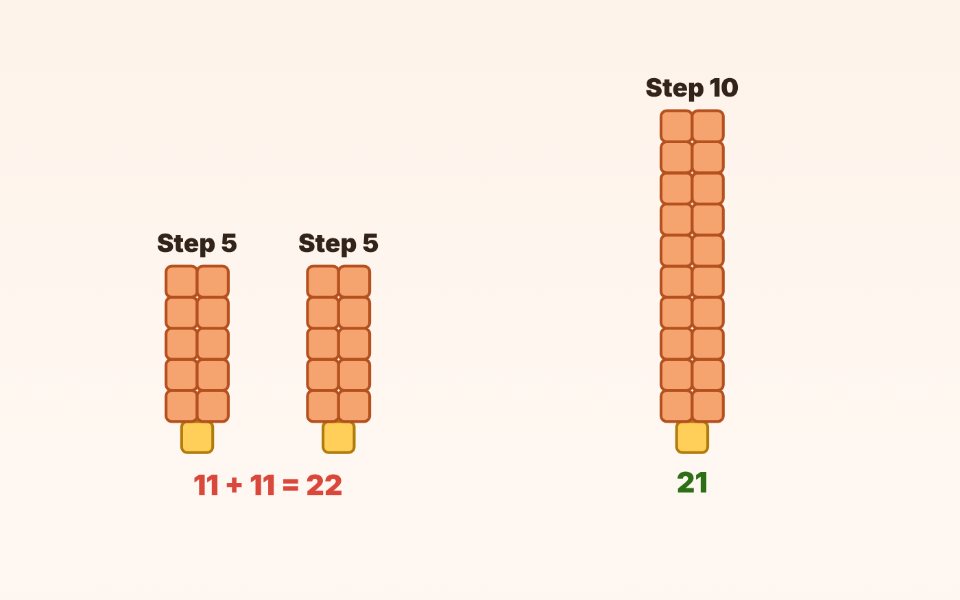
Does a pattern repeat or grow?
5 min -
C1.2 · C1.3 · One pattern, many representations
 Up next
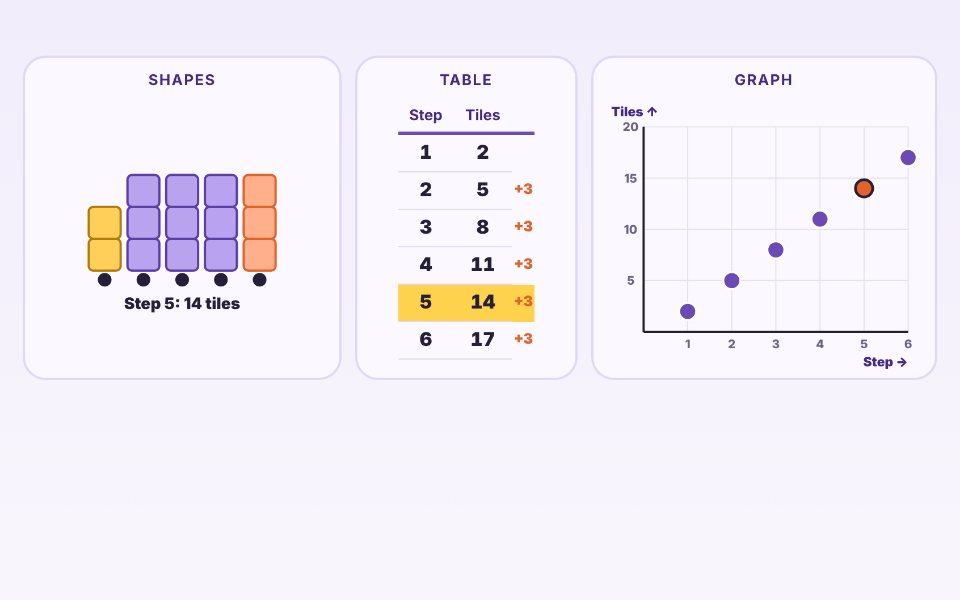
Shapes, table, graph: one pattern?
6 min -
C2.1 · Variables
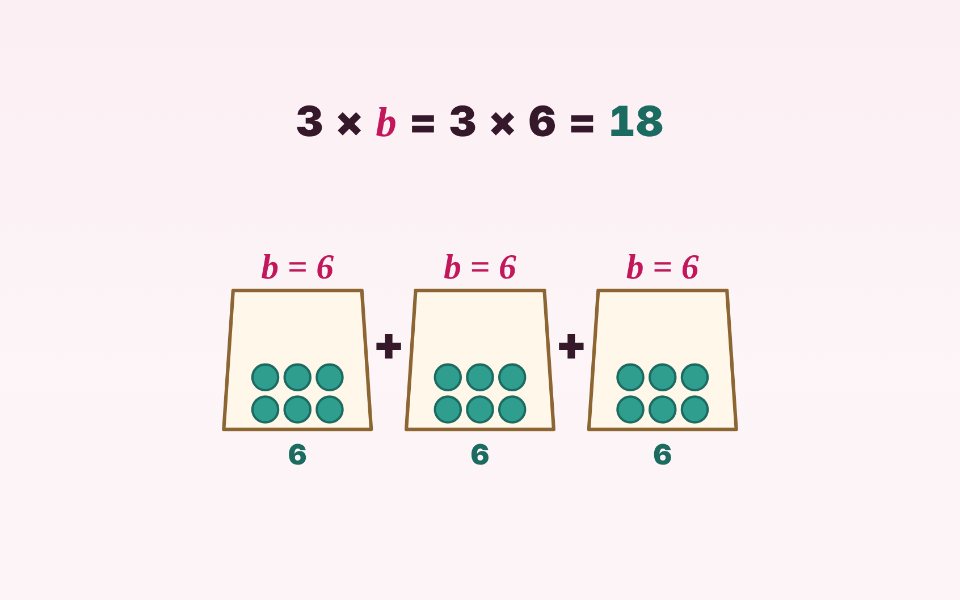 Up next
What does the letter stand for?
5 min -
C2.2 · Equations as balance
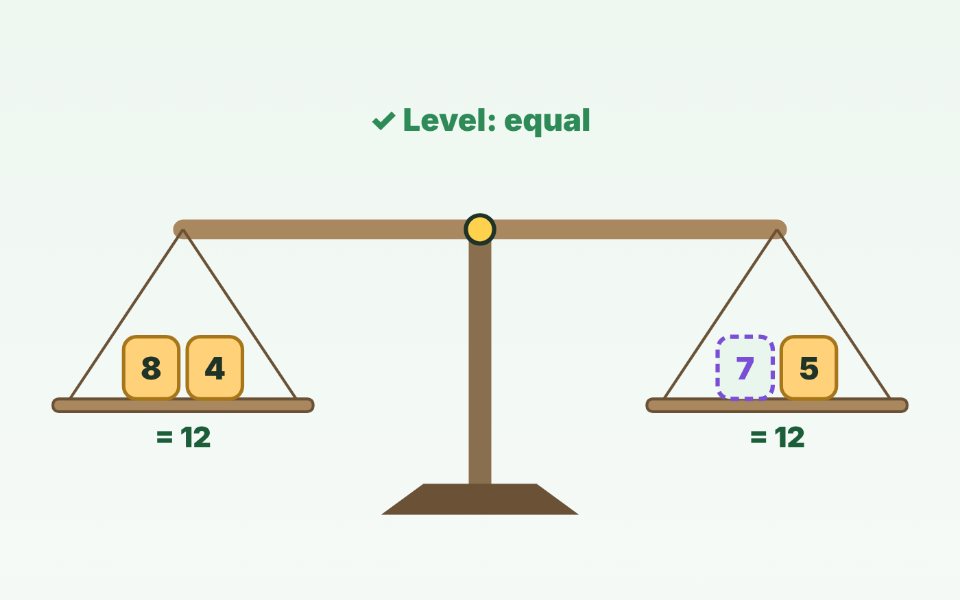 Up next
What does the = sign really mean?
15 min -
C2.3 · Inequalities
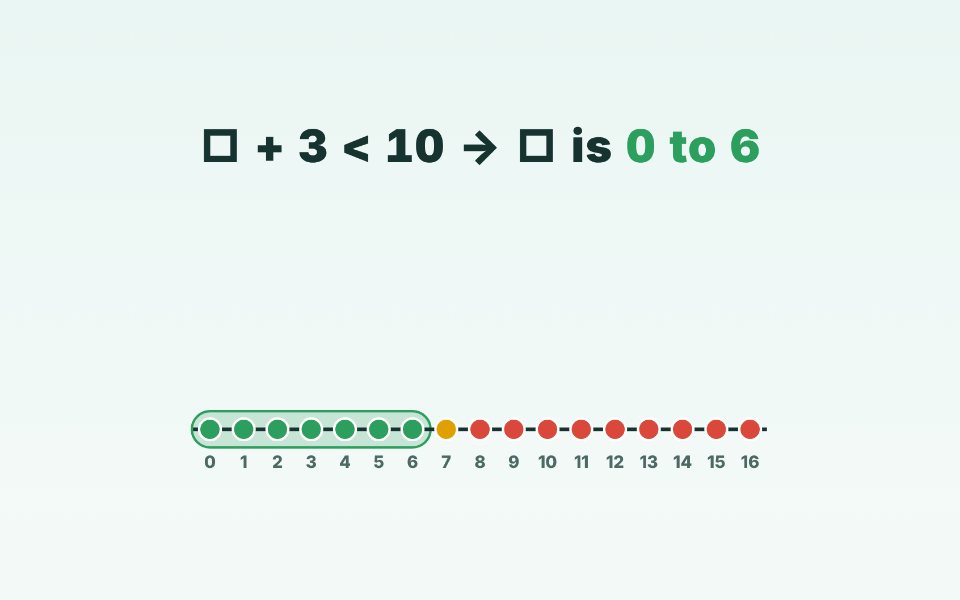 Up next
How many answers can □ + 3 < 10 have?
5 min -
C3.1 · C3.2 · How code runs: sequence, concurrency, repetition, nesting
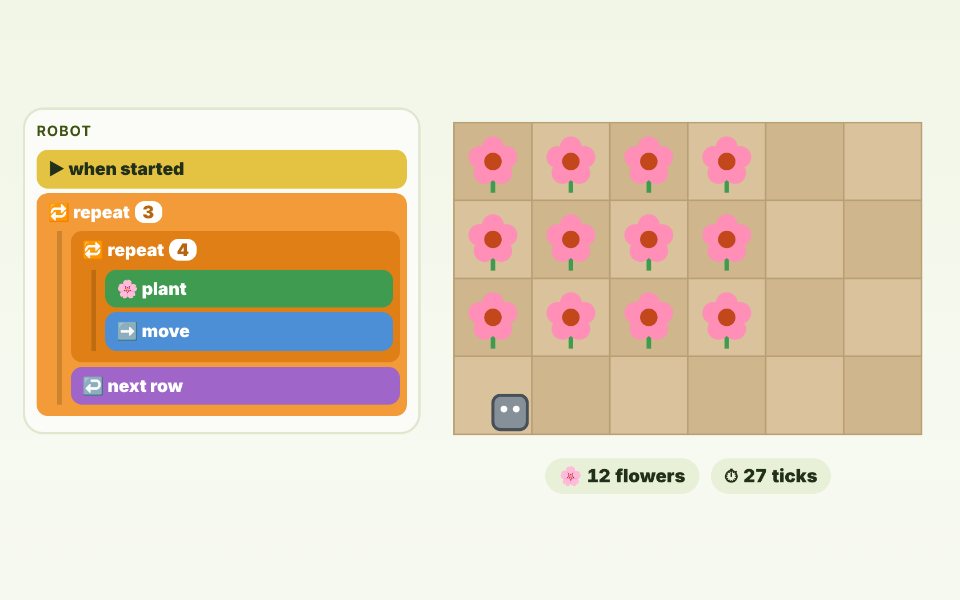 Up next
Why does a loop inside a loop multiply?
6 min -
D1.1 · D1.3 · Kinds of data and choosing a graph
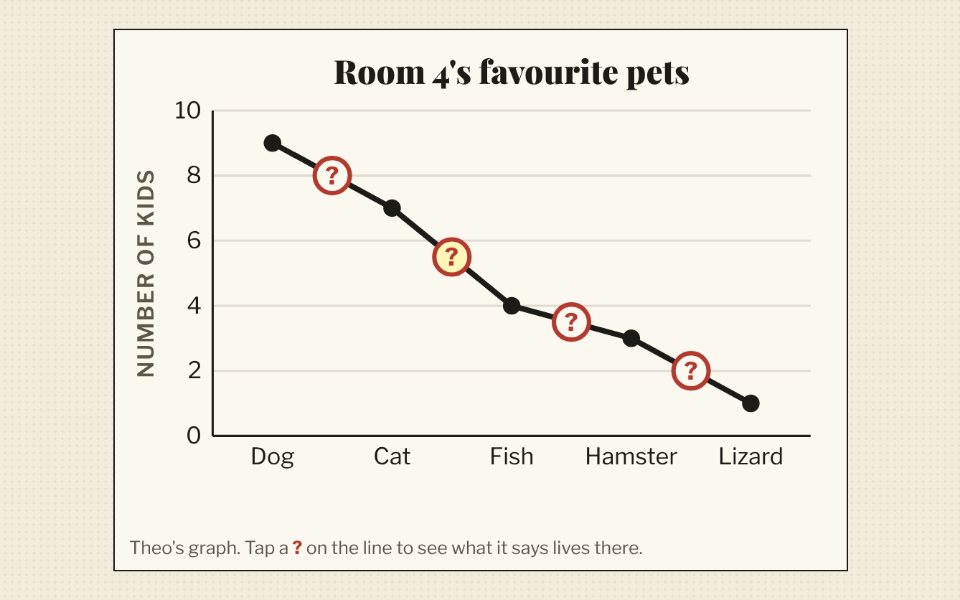 Up next
Can a graph lie about pets?
8 min -
D1.2 · D1.6 · Stem-and-leaf plots
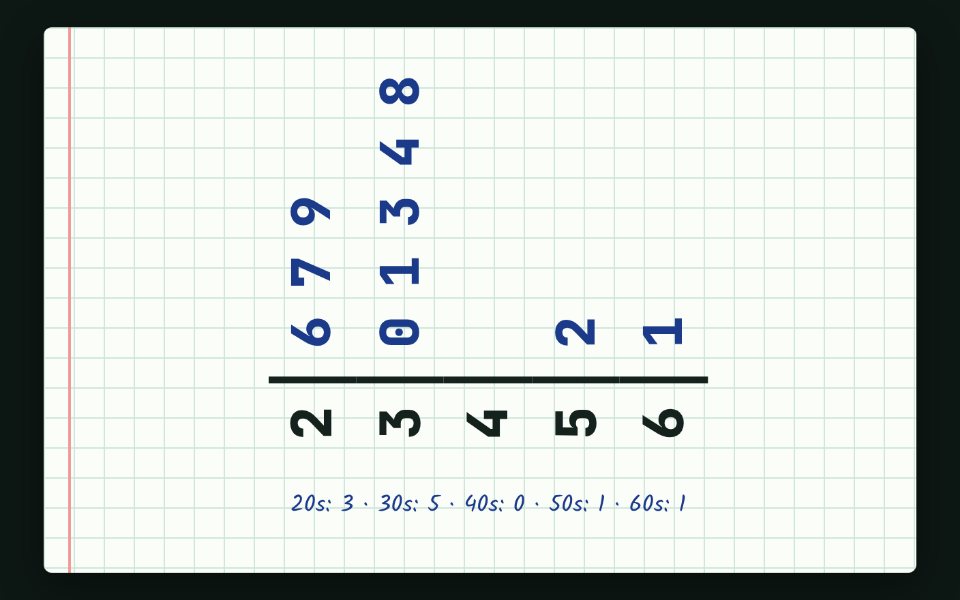 Up next
How fast are you? Sort your own reaction times
8 min -
D1.5 · Mean, median and mode
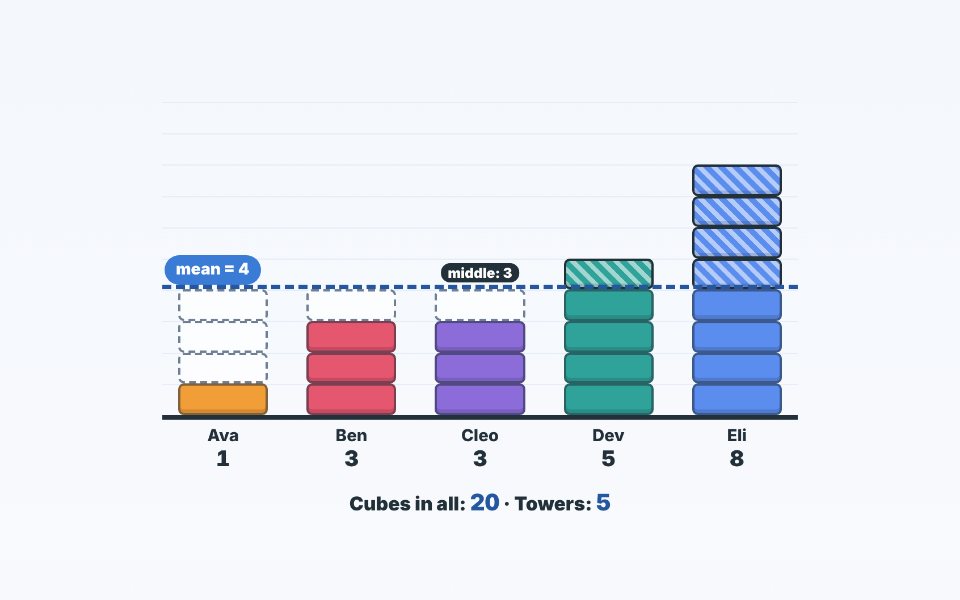 Up next
Why isn't the average just the middle one?
6 min -
D2.1 · The likelihood scale
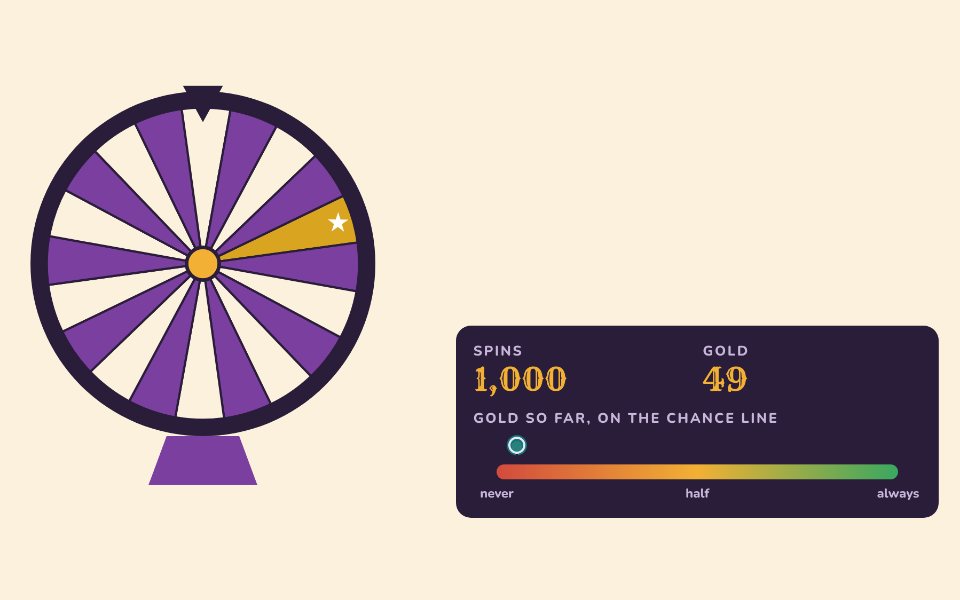 Up next
Does "unlikely" mean "never"?
8 min -
E1.1 · Parallel, perpendicular and symmetry
 Up next
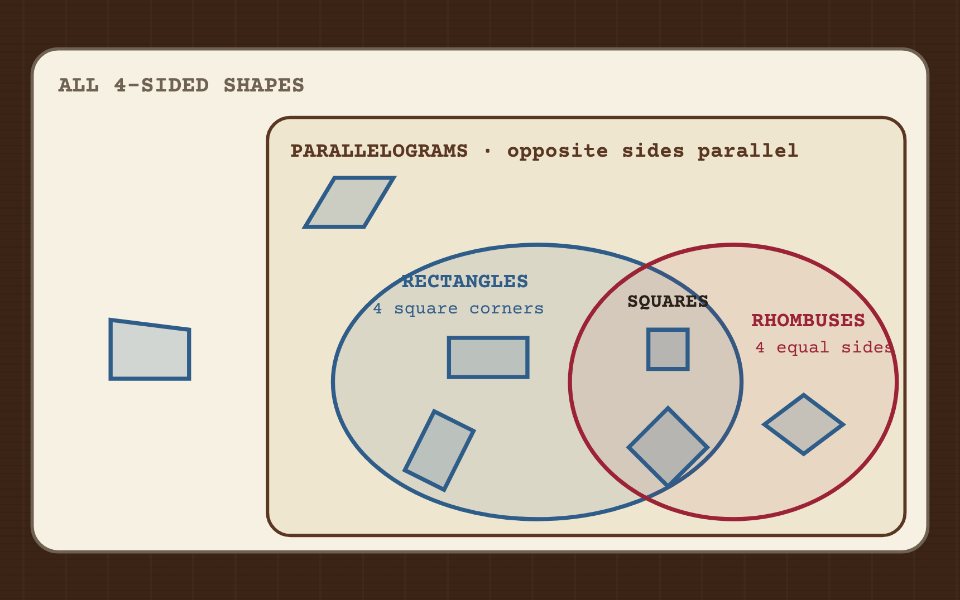
Is a square a rectangle? The trial
8 min -
E1.2 · The coordinate grid
 Up next
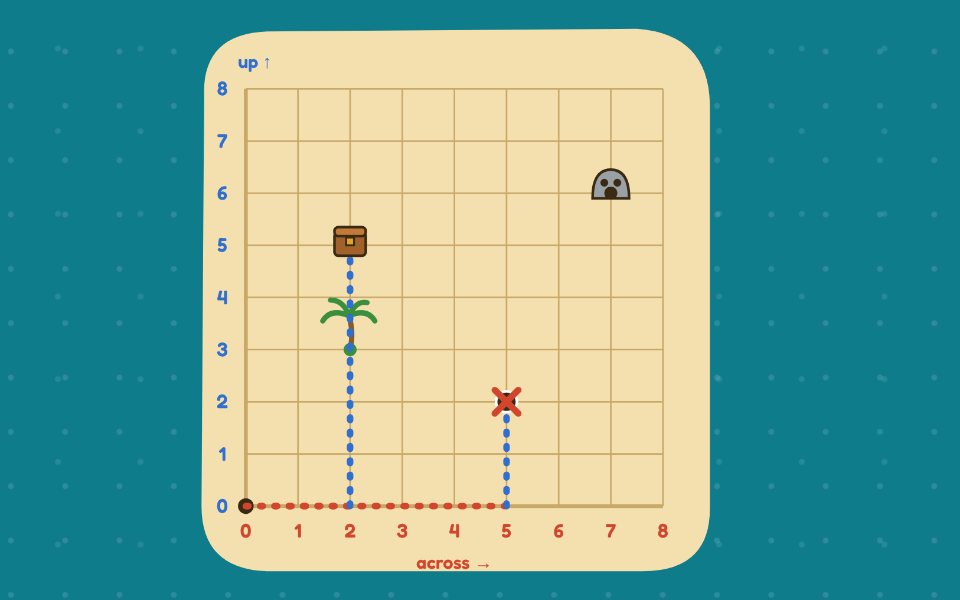
Treasure grid: across first, then up
8 min -
E1.2 · E1.3 · Translations and reflections
 Up next
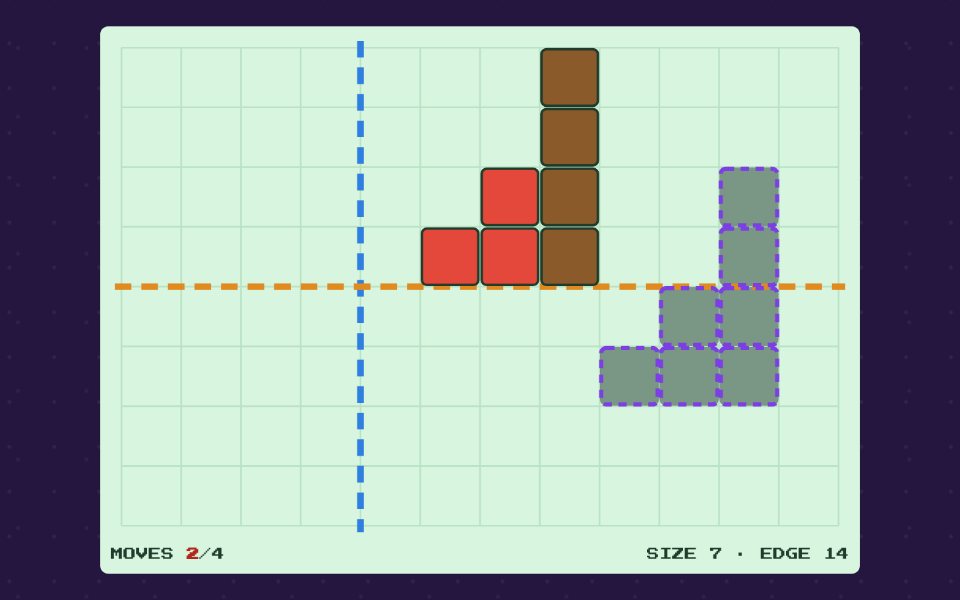
Flip and slide: fit the shadow
7 min -
E2.1 · E2.2 · Metric units and prefixes
 Up next
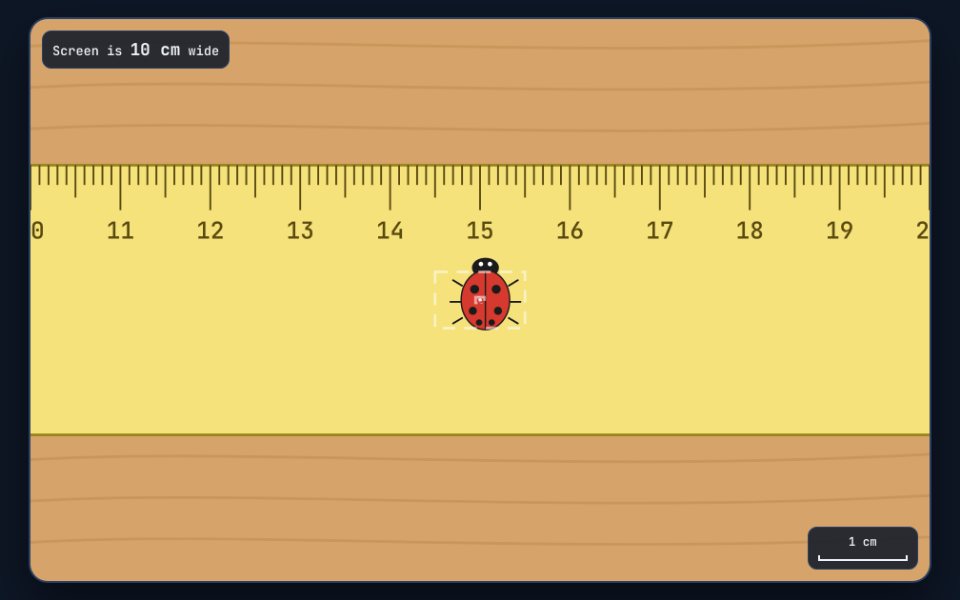
Zoom from a kilometre to a millimetre
7 min -
E2.3 · Elapsed time
 Up next
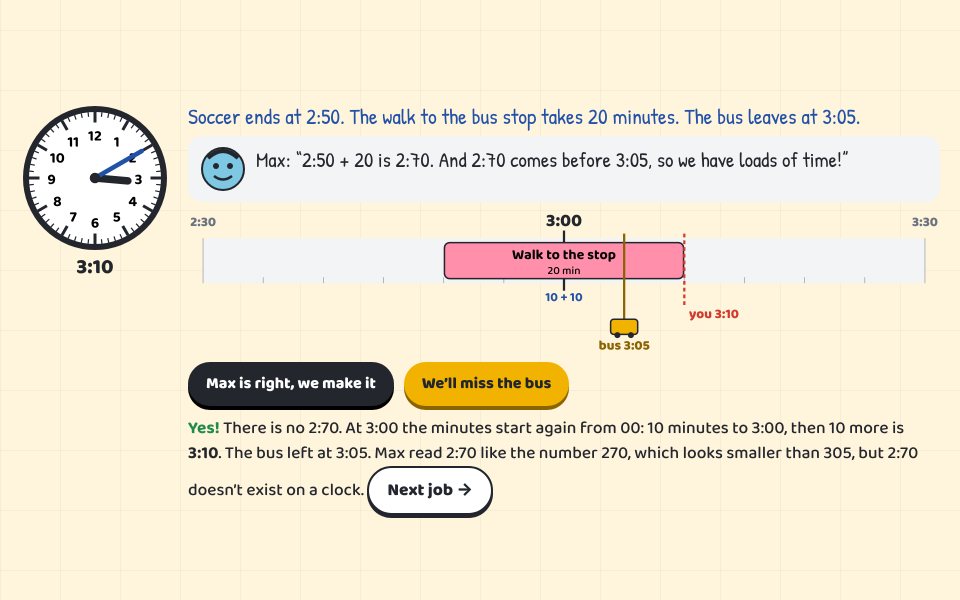
Don’t miss the bus: planning with time
8 min -
E2.4 · Angles as turns
 Up next
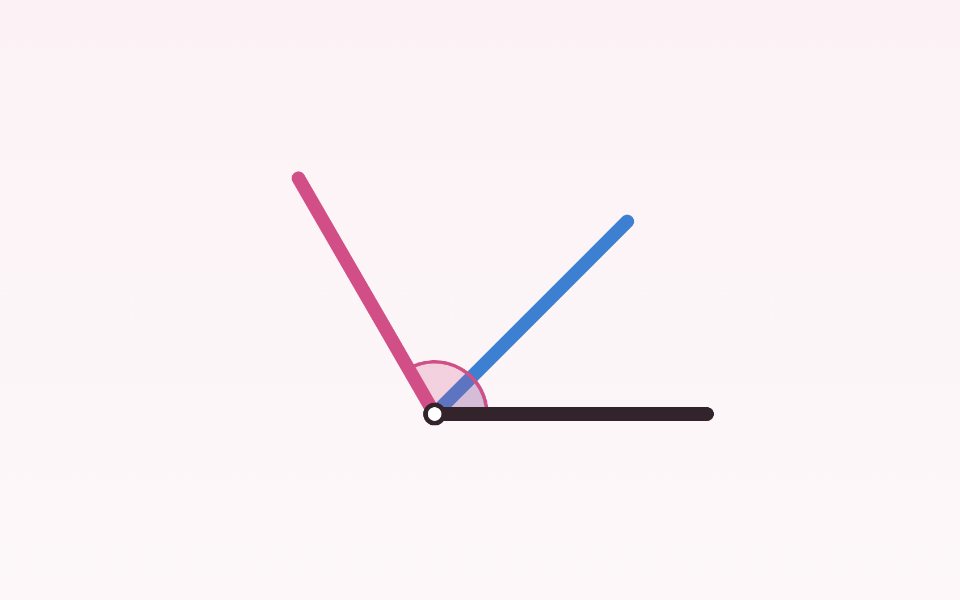
What makes an angle bigger?
6 min -
E2.5 · E2.6 · Area of a rectangle
 Up next
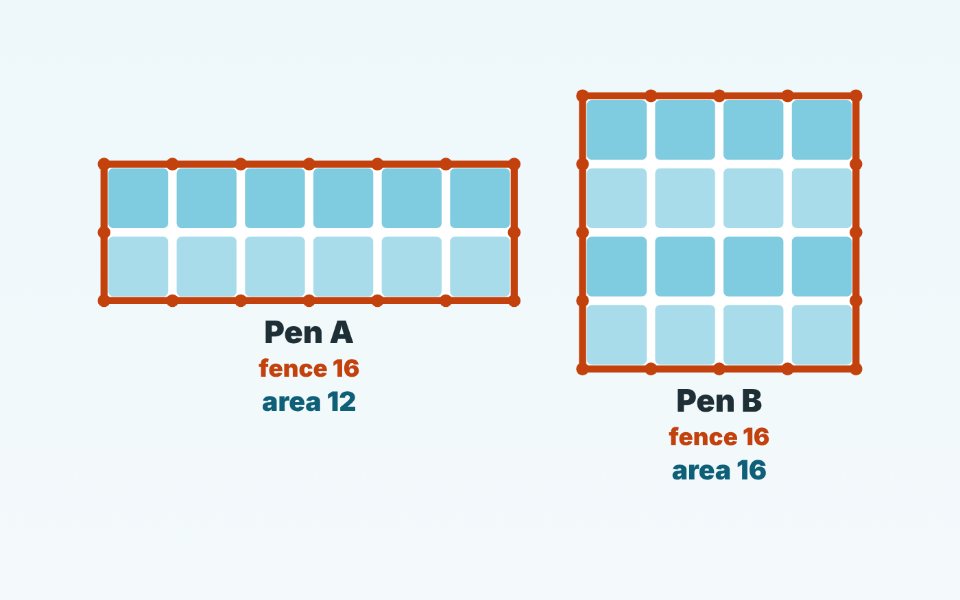
Why is area rows × columns?
6 min
Every idea
Grouped by curriculum strand. A filled dot means there is a lesson.
B Number16 / 16 with a lesson
- Place valueIs a 3 always worth three?B1.1 · B1.2Each place to the left is worth ten times the place to its right, so a few digits can name very large numbers.
- RoundingIs 47 closer to 40 or 50?B1.3 · B1.8Rounding finds the nearest landmark number (ten, hundred, thousand, or whole) on the number line.
- Multiplying by 10, 100 and 1000Why isn't ×10 just "add a 0"?B2.3 · C1.4Multiplying by 10 moves every digit one place to the left; 'add a zero' is only a shortcut, and it breaks for decimals.
- Regrouping in addition and subtractionWhat does borrowing really do in 52 − 27?B2.4 · F1.2Carrying and borrowing are just trading ten of one place for one of the next.
- What multiplication meansWhat makes something a times question?B2.2 · B2.5Multiplication counts equal groups; arranged in rows, the groups form a rectangle.
- Properties of multiplicationWhy does 7 × 13 equal 70 + 21?B2.1Turning, regrouping or splitting an array never changes how many squares it holds; that is why order, grouping and splitting don't change a product.
- Area model for multiplicationWhy does 7 × 13 equal 70 + 21?B2.523 × 4 splits into 20 × 4 and 3 × 4: two rectangles that fit back together.
- Inverse operationsHow do you find the number that went in?B2.1 · E2.6Subtraction undoes addition and division undoes multiplication, so each one can check the other.
- Division and remaindersWhat happens to the leftovers?B2.6Division shares equally; whatever is left over can be cut further into fractions of a share.
- RatesEach crate holds 6. How many in 4 crates?B2.8'Each' and 'per' describe a multiplying link: if each box holds 6, then 4 boxes hold 4 × 6.
- What a fraction meansFraction Snack Lab: Meet the Two NumbersB1.4The denominator says how many equal parts the whole is cut into; the numerator says how many of those parts you have.
- Comparing unit fractionsWhy is 1/8 smaller than 1/3?B1.5The more people share a whole, the smaller each share, so 1/8 is less than 1/3.
- Fractions on the number lineCan a fraction be bigger than 1?B1.6A fraction is a point on the number line; counting by a unit fraction steps along it, past 1 and beyond.
- Multiplying a fraction by a whole numberWhat is 3 × 1/4?B2.7Three copies of 1/4 laid end to end make 3 × 1/4 = 3/4.
- Decimal tenthsWhy is 1/2 the same as 0.5?B1.7 · B2.3The first digit after the decimal point counts tenths: one whole cut into ten equal parts.
- Fractions and decimals name the same numbersWhy is 1/2 the same as 0.5?B1.93/10 and 0.3 are two ways of writing the same point on the number line.
C Algebra6 / 6 with a lesson
- Repeating and growing patternsDoes a pattern repeat or grow?C1.1 · C1.3 · C1.4A repeating pattern cycles through the same core; a growing pattern changes by a rule at every step.
- One pattern, many representationsShapes, table, graph: one pattern?C1.2 · C1.3The same growing pattern can be drawn as shapes, written as a table of values, or plotted as points on a graph.
- VariablesWhat does the letter stand for?C2.1A letter or symbol holds the place of a number we don't know yet.
- Equations as balanceWhat does the = sign really mean?C2.2An equation is a balance: do the same thing to both sides and it stays level.
- InequalitiesHow many answers can □ + 3 < 10 have?C2.3An inequality's answer is not one number but a whole stretch of the number line.
- How code runs: sequence, concurrency, repetition, nestingWhy does a loop inside a loop multiply?C3.1 · C3.2Code runs in four shapes: one step after another, several at once, over and over, or loops inside loops.
D Data4 / 4 with a lesson
- Kinds of data and choosing a graphCan a graph lie about pets?D1.1 · D1.3Data is either measured and counted (quantitative) or sorted into categories (qualitative), and the graph has to fit the kind of data.
- Stem-and-leaf plotsHow fast are you? Sort your own reaction timesD1.2 · D1.6Using tens as stems and ones as leaves sorts the data and draws a sideways bar graph at the same time.
- Mean, median and modeWhy isn't the average just the middle one?D1.5The mean levels the bars out, the median is the one in the middle, and the mode is the most common.
- The likelihood scaleDoes "unlikely" mean "never"?D2.1Chance lives on a line from impossible to certain, with 'equally likely' in the middle.
E Spatial Sense7 / 7 with a lesson
- Angles as turnsWhat makes an angle bigger?E2.4An angle measures how far something turns, not how long its arms are.
- Parallel, perpendicular and symmetryIs a square a rectangle? The trialE1.1A rectangle is built from right angles: opposite sides never meet, neighbouring sides meet square, and folding lines match it onto itself.
- The coordinate gridTreasure grid: across first, then upE1.2Two numbers, across then up, pin down exactly one point.
- Translations and reflectionsFlip and slide: fit the shadowE1.2 · E1.3Sliding or flipping a shape changes where it is, never its size or shape.
- Metric units and prefixesZoom from a kilometre to a millimetreE2.1 · E2.2Kilo means a thousand and milli means a thousandth: the same base-ten trade as place value.
- Elapsed timeDon’t miss the bus: planning with timeE2.3Time doesn't trade in tens: 60 minutes make an hour, so time arithmetic regroups at 60.
- Area of a rectangleWhy is area rows × columns?E2.5 · E2.6A rectangle holds rows × columns of unit squares, so its area is length × width.
Practised inside lessons, not separate pages
These expectations are about speed and fluency with an idea above. They show up as practice in that idea's lesson.
- B1.2 Compare and order whole numbers up to 10 000.
- B1.8 Round decimal numbers to the nearest whole number.
- B2.2 Recall multiplication facts 1 × 1 to 10 × 10 and related division facts.
- C1.3 Determine pattern rules to extend patterns, make predictions and find missing elements.
- C1.4 Create and describe patterns showing relationships among whole numbers and decimal tenths.
- C3.2 Read and alter existing code with these event types and describe how changes affect the outcome.
- D1.6 Analyse stem-and-leaf plots and multiple-bar graphs to draw conclusions and make decisions.
- E2.6 Use the rectangle area formula to find an unknown when two of the three values are known.
- F1.2 Estimate and mentally calculate the cost of whole-dollar purchases and the change owed.
Not covered here
These are projects, process skills or everyday money knowledge. They don't have a single "why" to take apart, so we leave them to the classroom.
- C4.1 Apply the mathematical modelling process to real-life situations.
- D1.4 Create an infographic that tells a story about a data set.
- D2.2 Predict and test whether mean, median and mode match across data from different populations.
- F1.1 Identify methods of payment for goods and services.
- F1.3 Explain spending, saving, earning, investing and donating, and the factors in each decision.
- F1.4 Explain how spending and saving relate and how they differ between people.
- F1.5 Describe ways to judge whether a purchase is a good buy.